Common Dental Problems in Children
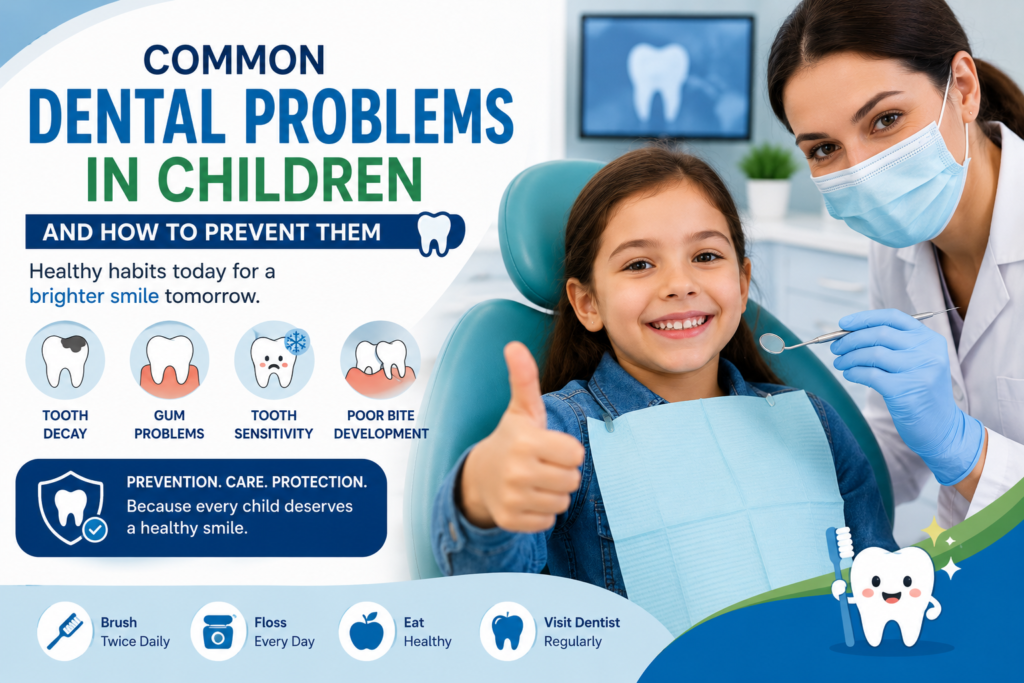
A child's oral health plays a vital role in their overall growth and development. Healthy teeth help children eat, speak, and smile with confidence. Understanding common childhood dental problems allows parents to take early action and protect their child's smile for years to come.
Why Children's Dental Health Matters
Primary (baby) teeth are essential for proper chewing, speech development, jaw growth, and guiding permanent teeth into their correct positions.
Healthy baby teeth build the foundation for healthy permanent teeth.
Tooth Decay (Cavities)
Tooth decay is one of the most common dental problems in children. Sugary snacks, chocolates, juices, and soft drinks allow bacteria to produce acids that damage tooth enamel.
- Frequent sugary snacks
- Poor brushing habits
- Sticky sweets
- Inadequate fluoride exposure
Brushing twice daily and limiting sugary foods greatly reduces cavity risk.
Gum Problems
Plaque build-up can cause swollen, red, or bleeding gums in children. Early gum inflammation can usually be treated through better oral hygiene and professional dental cleaning.
- Bleeding while brushing
- Swollen gums
- Redness
- Bad breath
Thumb Sucking
Thumb sucking is common in young children, but continuing beyond four or five years of age may affect jaw growth and tooth alignment.
Early guidance helps prevent bite and alignment problems.
Tooth Sensitivity
Some children experience pain when eating hot, cold, or sweet foods. Sensitivity may indicate enamel wear, cavities, or small cracks.
- Cold foods cause discomfort
- Sweet foods trigger pain
- Possible enamel wear
- Hidden cavities
Early Loss of Baby Teeth
Losing baby teeth too early due to injury or decay may affect the proper eruption and alignment of permanent teeth.
Dentists may recommend space maintainers when necessary.
Prevention Is the Best Treatment
Most childhood dental problems can be prevented with healthy habits, regular dental check-ups, and proper oral hygiene from an early age.
- Brush twice daily
- Floss regularly
- Healthy diet
- Routine dental visits
Prevention today leads to healthier smiles tomorrow.
Helping Your Child Maintain a Healthy Smile
Early dental care, healthy daily habits, and regular dental visits play an important role in protecting your child's oral health and preventing future dental problems.
Common Signs Parents Should Watch For
Children may not always explain dental discomfort clearly. Parents should look for these warning signs:
- Tooth pain while eating
- Bleeding gums during brushing
- White or dark spots on teeth
- Persistent bad breath
- Difficulty chewing
- Swollen gums or cheeks
- Sensitivity to hot or cold foods
How Parents Can Help Prevent Dental Problems
Healthy oral hygiene habits developed during childhood can protect teeth for a lifetime.
- Brush twice daily with fluoride toothpaste.
- Floss once teeth begin touching.
- Limit sugary foods and drinks.
- Drink plenty of water.
- Eat calcium and vitamin-rich foods.
- Visit the dentist every six months.
Why Regular Dental Check-Ups Are Important
Routine dental visits help detect problems early before they become painful or require extensive treatment.
Dentists monitor oral development, examine teeth and gums, and provide preventive treatments while guiding parents on proper oral care.
Why Choose Tooth Vitals?
At Tooth Vitals Multispeciality Dental Clinic, we provide gentle, child-friendly dental care in a comfortable environment where every child feels relaxed.
- Friendly Pediatric Care
- Preventive Dental Check-ups
- Cavity Treatment
- Oral Hygiene Guidance
- Modern Dental Technology
Conclusion
Children's dental health requires consistent care from an early age. Most dental problems can be prevented through healthy eating habits, good oral hygiene, and regular dental check-ups.
By recognizing warning signs early and seeking professional dental care, parents can help their children enjoy healthy teeth, strong gums, and confident smiles for life.
Frequently Asked Questions
At what age should my child first visit a dentist?
Children should visit a dentist within six months after the first tooth appears or by their first birthday.
How often should children visit the dentist?
Every six months is recommended for routine examinations and preventive care.
What causes cavities in children?
Sugary foods, poor brushing habits, and plaque buildup are the most common causes of childhood cavities.
Is thumb sucking harmful?
Thumb sucking is normal in infancy but may affect tooth alignment and jaw development if it continues after age five.
How can I encourage my child to brush regularly?
Use child-friendly toothbrushes, fluoride toothpaste, reward charts, and brush together as a family.