
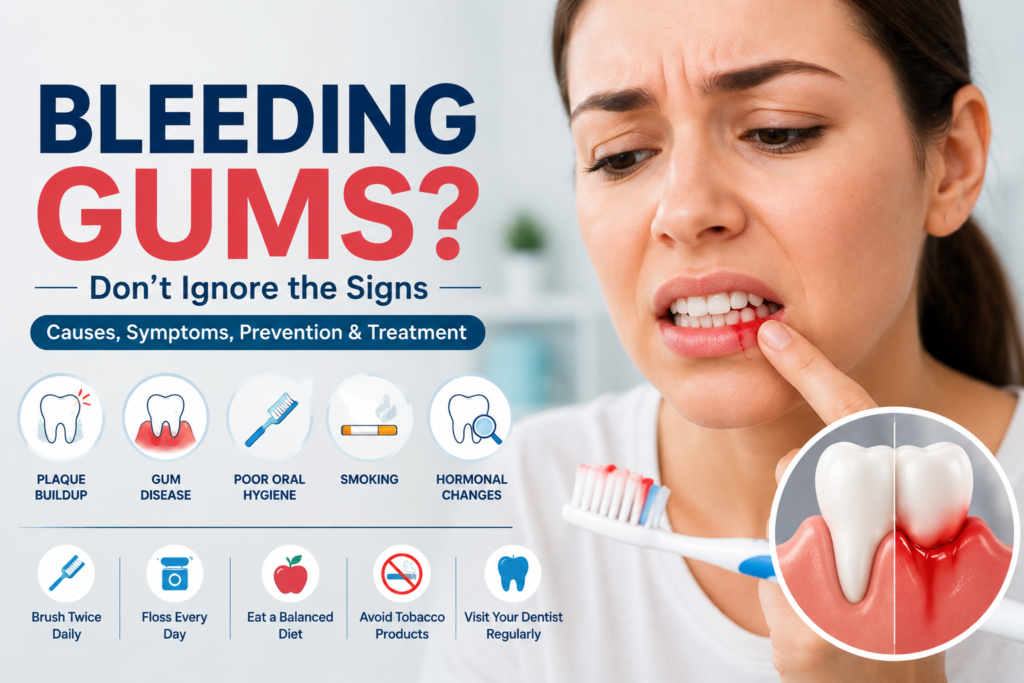
Why Are My Gums Bleeding When I Brush or Floss?
Noticing blood while brushing or flossing can be worrying, especially when it happens regularly. Although occasional bleeding may seem like a minor issue, persistent bleeding gums should not be ignored. In many cases, bleeding can be an early sign that your gums need more attention or professional dental care.
Healthy gums are an important part of good oral health because they support and protect your teeth. Understanding why gums bleed and knowing when to seek treatment can help prevent a small problem from developing into a more serious dental condition.
Important: If your gums bleed frequently while brushing or flossing, it is worth discussing the problem with a dental professional rather than ignoring it.
01 What Causes Bleeding Gums?
One of the most common reasons for bleeding gums is plaque buildup along the gum line. Plaque contains bacteria that can irritate the gums and cause inflammation. When it is not removed properly through regular brushing and flossing, it can eventually harden into tartar.
Bleeding can also occur when someone starts flossing after a long gap, brushes too aggressively, or uses a toothbrush with hard bristles. However, if the bleeding continues despite improving your oral hygiene, it is important to have your gums examined by a dentist.
02 Gum Disease and Bleeding Gums
Bleeding gums are often associated with gum disease. In its early stage, gum disease can cause redness, swelling, tenderness, and bleeding during brushing or flossing. This stage is commonly known as gingivitis.
Without proper care, gum disease can progress and affect the tissues and bone supporting the teeth. Advanced gum problems may lead to receding gums, loose teeth, persistent bad breath, and eventually tooth loss.
The good news
Early gum problems can often be managed effectively with professional dental care and better daily oral hygiene.
03 Other Reasons Your Gums May Bleed
Plaque is not the only possible cause of bleeding gums. Certain dental and lifestyle factors can also contribute to the problem. For example, poorly fitting dental restorations, changes in oral hygiene habits, smoking, or some medications may increase the likelihood of gum bleeding.
Hormonal changes can also make the gums more sensitive in some people. Because there can be several possible causes, recurring bleeding should be evaluated rather than treated only with home remedies.
- Poorly fitting dental restorations
- Changes in oral hygiene habits
- Smoking
- Certain medications
- Hormonal changes
If bleeding gums keep occurring despite maintaining good oral hygiene, professional dental evaluation can help identify the underlying cause and guide appropriate treatment.
04 Signs You Should Not Ignore
Bleeding gums become more concerning when they occur along with other symptoms. If you notice any of the following, consider scheduling a dental examination:
- Swollen or red gums
- Persistent bad breath
- Gum tenderness or sensitivity
- Receding gums
- Pain while chewing
- Loose or shifting teeth
- Pus around the gums
These symptoms can indicate that the problem has progressed beyond simple gum irritation.
05 Can Bleeding Gums Be Prevented?
Good oral hygiene is one of the most effective ways to keep your gums healthy. Brushing twice a day with fluoride toothpaste helps remove plaque from the teeth and gum line, while daily flossing cleans areas that a toothbrush cannot reach.
Your eating habits also matter. Reducing frequent sugary snacks and drinks, drinking enough water, and maintaining a balanced diet can support better oral health.
Brush Twice Daily
Brush gently with fluoride toothpaste to help remove plaque from your teeth and gum line.
Clean Between Teeth
Daily flossing helps clean areas that your toothbrush cannot reach effectively.
Choose Healthy Habits
Limit frequent sugary foods and drinks, drink enough water, and maintain a balanced diet.
06 Why Professional Gum Treatment May Be Needed
Once plaque has hardened into tartar, brushing alone cannot remove it. Professional dental cleaning can help remove accumulated deposits and improve gum health.
If gum disease has progressed, your dentist may recommend additional treatment based on the condition of your gums.
The right treatment depends on the cause and severity of the problem. This is why a proper dental examination is important before deciding how bleeding gums should be treated.
07 What Happens During a Gum Examination?
During a dental examination, the dentist checks the condition of your teeth and gums and looks for signs of inflammation, infection, gum recession, or other oral health concerns. Depending on your symptoms, further evaluation may be recommended.
Gum Assessment
Your dentist checks your gums and looks for inflammation, infection, recession, or other concerns.
Further Evaluation
Depending on your symptoms, your dentist may recommend additional evaluation.
Treatment Guidance
Once the cause is identified, your dentist can explain suitable treatment options and home-care advice.
08 Why Treating Bleeding Gums Early Matters
Ignoring bleeding gums may allow an underlying gum problem to progress. Early attention can make treatment easier and may help protect the tissues supporting your teeth.
Taking action early also gives you an opportunity to improve your brushing and flossing habits, identify areas that need professional cleaning, and prevent recurring gum problems.
09 Maintaining Healthy Gums After Treatment
Good gum health does not end after professional treatment. Maintaining a consistent oral hygiene routine is essential for keeping your gums healthy in the long term.
Brush gently twice a day, clean between your teeth every day, and attend regular dental check-ups. If your dentist recommends a specific cleaning routine or follow-up schedule, following those instructions can help maintain the results of treatment.
Conclusion
Bleeding gums are not something you should simply learn to live with. While occasional bleeding can have a simple explanation, frequent or persistent bleeding may be a sign of gum inflammation or disease that needs professional attention.
With proper oral hygiene, regular dental check-ups, and timely treatment, many gum problems can be managed before they become more serious. If you are experiencing bleeding, swelling, sensitivity, or other changes in your gums, speaking with a dental professional can help identify the cause and protect your long-term oral health.
At Tooth Vitals Multispeciality Dental Clinic, patients can receive personalised care for gum problems along with guidance on maintaining healthy teeth and gums.
FAQs About Bleeding Gums
Find answers to some common questions about bleeding gums, oral hygiene, treatment, and when to see a dentist.
Gums that regularly bleed while brushing are not considered healthy. Persistent bleeding may be a sign of gum inflammation or another underlying dental problem and should be evaluated by a dentist.
Plaque buildup along the gum line is one of the most common causes. If plaque is not removed properly, it can irritate the gums and contribute to inflammation.
Yes. Treatment depends on the underlying cause. Professional cleaning, improved oral hygiene, and other gum treatments may be recommended depending on the condition of your gums.
Do not automatically stop cleaning between your teeth. Gentle, regular flossing can help remove plaque, but if bleeding continues or becomes frequent, consult a dentist to determine the cause.
If your gums bleed regularly, or if bleeding is accompanied by swelling, pain, bad breath, gum recession, or loose teeth, you should schedule a dental examination.
Regular oral hygiene and timely dental examinations can help you maintain healthier gums and protect your smile for the long term.