Dental Crowns and Bridges: Restoring Damaged and Missing Teeth
A damaged, weakened, or missing tooth can affect much more than the appearance of your smile. It can make chewing uncomfortable, affect the way you speak, and sometimes cause neighbouring teeth to shift. Fortunately, modern restorative dentistry offers several ways to restore the function and appearance of damaged or missing teeth.
Dental crowns and bridges are two commonly used restorative treatments that can help bring back the strength, function, and natural appearance of your smile. Although both are used to restore teeth, they serve different purposes and are recommended depending on your individual dental condition.
What Is a Dental Crown?
A dental crown is a custom-made restoration that covers a damaged or weakened tooth. It is designed to fit over the existing tooth and restore its shape, strength, and appearance.
Crowns are often recommended when a tooth has been significantly damaged by decay, cracks, injury, or after a root canal treatment. In such situations, a filling may not provide enough support to protect the remaining tooth structure.
A well-designed crown can help the tooth function normally while also blending naturally with the surrounding teeth.
When Might You Need a Dental Crown?
A crown may be recommended when a tooth has lost a substantial amount of its natural structure. For example, a tooth that has undergone Root Canal Treatment may require additional protection because it can become more vulnerable to fracture.
Crowns can also be used for teeth that are severely worn, cracked, heavily filled, or affected by extensive decay. In some cases, they are also used to improve the appearance of a damaged or discoloured tooth.
The dentist will examine the tooth carefully before recommending a crown and determine whether it can be restored successfully.
What Is a Dental Bridge?
A dental bridge is a restoration used to replace one or more missing teeth. It generally consists of an artificial tooth, known as a pontic, supported by crowns attached to neighbouring teeth or other supporting structures.
When a tooth is missing, the surrounding teeth can gradually move into the empty space. This may affect your bite and make cleaning more difficult. A dental bridge can fill the gap and help restore a more balanced smile and chewing function.
When Is a Dental Bridge Recommended?
A dental bridge may be considered when one or more teeth are missing and there are suitable teeth or structures available to support the restoration.
Replacing a missing tooth is not only about appearance. Missing teeth can affect chewing and may change how pressure is distributed across the remaining teeth. Restoring the space can help maintain better dental function and make everyday activities such as eating more comfortable.
Your dentist will assess the condition of the surrounding teeth, gums, and bone before deciding whether a bridge is appropriate.
Dental Crowns vs Dental Bridges
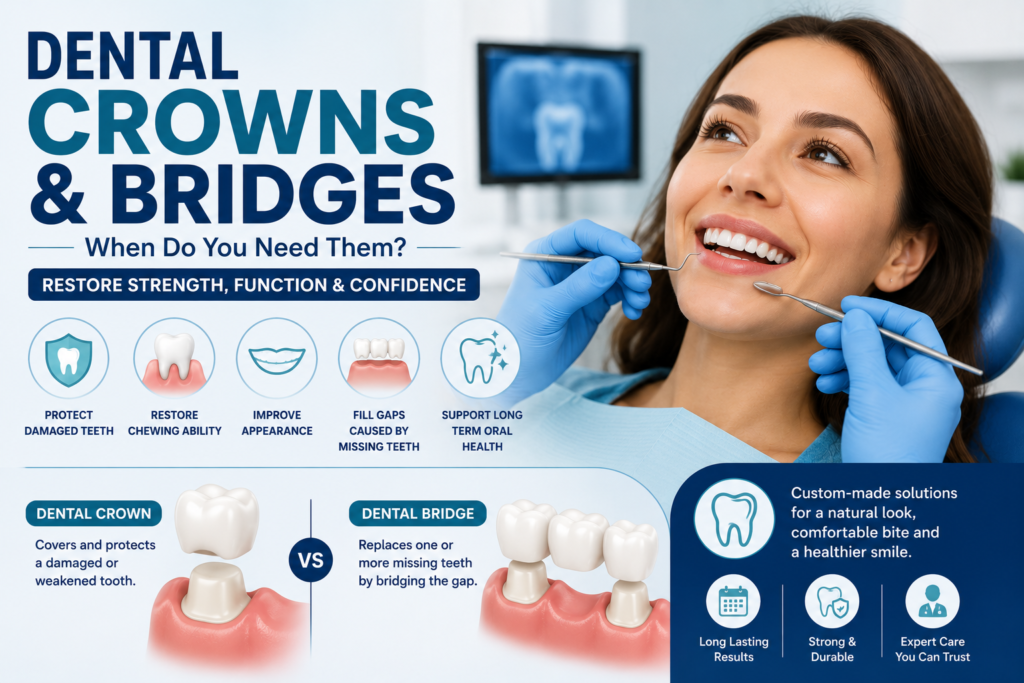
Although crowns and bridges are both restorative treatments, their purpose is different. A crown generally restores and protects an existing tooth, while a bridge replaces a missing tooth or teeth by filling the gap between neighbouring teeth or supporting structures.
Dental Crown
A crown covers and protects a damaged or weakened existing tooth while restoring its shape, strength, function, and appearance.
Dental Bridge
A bridge replaces one or more missing teeth by filling the gap and using suitable supporting teeth or structures.
The right option depends on factors such as the condition of your teeth, the number of missing teeth, your gum health, bite, and overall oral health. A professional dental examination is therefore important before choosing a treatment.
What Are the Benefits of Crowns and Bridges?
Restorative dental treatments can provide both functional and cosmetic benefits. A properly designed crown can protect a weakened tooth and allow you to use it more comfortably. A bridge can fill a visible gap and help restore normal chewing.
- Restore damaged or missing teeth
- Improve chewing function
- Support weakened teeth
- Improve the appearance of your smile
- Maintain a more balanced bite
The long-term success of either treatment also depends on good oral hygiene and regular dental care.
What Happens During the Treatment?
The treatment process depends on whether you need a crown or bridge and on the condition of your teeth. Your dentist will first examine your mouth and may take dental X-rays or other diagnostic images if required.
Dental Examination
Your dentist examines your teeth, gums, bite, and surrounding structures to determine the most appropriate treatment.
Crown Treatment
For a crown, the affected tooth is prepared so that the restoration can fit properly. An impression or digital scan is then used to create a custom restoration.
Bridge Treatment
For a bridge, the supporting teeth are assessed and prepared when necessary. The bridge is then designed to fit the space naturally and restore the function of the missing tooth.
Final Fitting
Once the restoration is ready, it is carefully fitted and checked for comfort, appearance, and bite.
Your dentist will explain each stage before treatment so you know what to expect.
How to Care for Dental Crowns and Bridges
Crowns and bridges are designed to be durable, but they still require proper care. They should be cleaned just like natural teeth because bacteria and plaque can accumulate around the restoration and gum line.
Brushing twice a day, cleaning between the teeth, and attending regular dental check-ups are important for maintaining the health of both your restoration and the surrounding teeth.
It is also sensible to avoid using your teeth to bite extremely hard objects, as excessive force can damage natural teeth as well as dental restorations.
How Long Do Crowns and Bridges Last?
The lifespan of a crown or bridge varies from person to person. Factors such as oral hygiene, biting forces, gum health, diet, and regular dental care can all influence how long the restoration remains in good condition.
With proper care and regular dental examinations, crowns and bridges can provide long-term service. Your dentist can also check the condition of the restoration during routine visits and identify any problems early.
Why Professional Evaluation Matters
Not every damaged or missing tooth requires the same treatment. In some cases, a filling may be sufficient, while other situations may require a crown, bridge, dental implant, or another restorative option.
Choosing treatment based on an online search alone is not recommended. A dentist needs to examine the tooth and surrounding tissues to determine which option is appropriate for your particular situation.
At Tooth Vitals Multispeciality Dental Clinic, treatment recommendations are based on the patient's individual dental condition, oral health, and long-term needs.
Conclusion
Dental crowns and bridges can play an important role in restoring damaged, weakened, or missing teeth. While crowns are primarily used to protect and restore existing teeth, bridges can replace missing teeth and help restore chewing function and the appearance of your smile.
The most suitable treatment depends on the condition of your teeth, gums, bite, and overall oral health. With proper treatment, good oral hygiene, and regular dental check-ups, restorative dentistry can help you maintain a healthy and functional smile for years to come.
If you have a damaged or missing tooth and are unsure which treatment is suitable, a professional dental consultation can help you understand your options and make an informed decision.
Frequently Asked Questions
1. What is the difference between a dental crown and a bridge?
A dental crown is used to cover and protect a damaged or weakened tooth, while a dental bridge is generally used to replace one or more missing teeth.
2. Is a dental crown painful?
The procedure is performed using appropriate local anesthesia, so patients generally should not feel pain during the preparation. Some temporary sensitivity may occur afterward.
3. Can a crown be placed after a root canal?
Yes. A crown is often recommended after root canal treatment when the remaining tooth structure needs additional protection and support.
4. How do I know if I need a dental bridge?
If you have one or more missing teeth, a dentist can examine the surrounding teeth and supporting tissues to determine whether a bridge is a suitable option.
5. Can I eat normally with a dental crown or bridge?
Once the restoration has been properly fitted and you have adjusted to it, you can generally eat normally. Your dentist may provide specific instructions depending on your treatment.